

DeAI Crypto 2026
Artificial intelligence used to belong to big corporations. They controlled the data, the models, and the decisions. But everything changes with DeAI crypto 2026. A new force is emerging where AI no longer sits inside closed systems. Instead, it spreads across decentralized networks powered by blockchain.
This shift is more than a technological upgrade. It is a transformation of ownership, intelligence, and value. It also signals a deeper evolution inside crypto itself. AI is no longer a side story. It’s becoming the driving engine of Web3.
As this revolution grows, decentralized AI blends with tokens, blockchains, and infrastructure. And the result is DeAI — a new kind of intelligence that belongs to everyone. In this article, you will explore how DeAI crypto 2026 works, why it matters, and how it will transform the entire crypto landscape.

1. What Is DeAI? A Simple Explanation
DeAI stands for Decentralized Artificial Intelligence. It is a system where AI models, data, and compute power no longer sit inside a single corporation. Instead, they live across a global network of independent contributors. Each contributor provides a piece of the intelligence — and each receives rewards through DeAI crypto 2026 token incentives.
This structure changes how AI is built. Training doesn’t come from one lab. Processing doesn’t rely on one server. Data doesn’t sit in one company’s vault. Everything becomes distributed through blockchain. Every contribution becomes trackable. And every participant shares ownership over the network.
This model also solves a major problem. Centralized AI depends on massive data centers and heavy corporate control. DeAI flips that by letting people run nodes from home or through decentralized compute platforms. These nodes contribute GPU cycles, storage, or model training. And blockchain ensures every action is verified and rewarded through DeAI crypto 2026 token mechanics.
As a result, DeAI becomes transparent, resilient, and open. It also gives developers and users more control over the future of AI — something centralized systems can’t offer.

2. Why Centralized AI Is Failing Us
Centralized AI has dominated the past decade. Big Tech companies built enormous models using private datasets. They owned everything — the data, the outputs, the decisions, and the profits. But cracks in this system are starting to show. And DeAI crypto 2026 is emerging precisely because the old way no longer works.
One major problem is privacy. Centralized models gather data from millions of users. Most people don’t know how that data is used or stored. People also have no control over what is collected. DeAI replaces data hoarding with data autonomy.
Another problem is bias. Centralized AI learns from limited datasets curated by corporations. This creates blind spots, skewed results, and dangerous assumptions. A distributed network reduces bias because it learns from many independent nodes.
There is also the issue of censorship. A centralized AI can be shut down, altered, or restricted by a single company. DeAI cannot. Its structure prevents manipulation because the network runs across thousands of contributors.
Finally, innovation slows when few companies hold all the power. DeAI encourages open competition, open innovation, and open participation. Developers can build, test, and release AI tools without asking for permission. This shift makes DeAI crypto 2026 more than a technical movement — it becomes a social and economic one.
3. How DeAI Works: Nodes, Compute, and Token Incentives
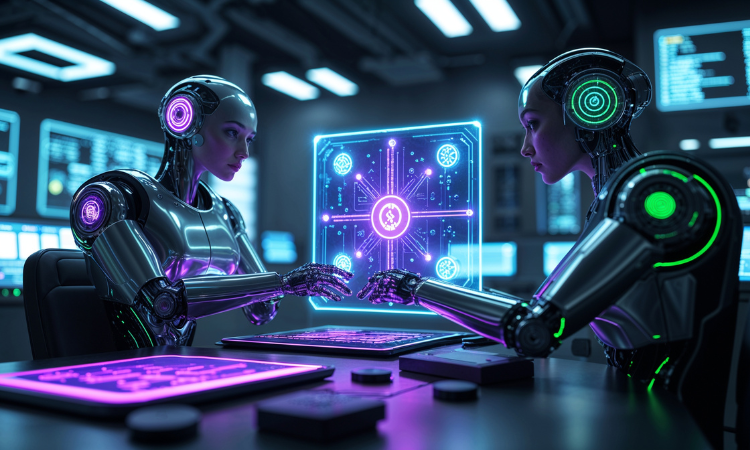
DeAI works through a network of nodes that handle different tasks. Some nodes provide compute power. Others provide storage for datasets or model parameters. Many more train or execute AI models. All these pieces work in harmony because blockchain coordinates their activity.
To understand the value of DeAI crypto 2026, you need to see the three layers that make DeAI function:
Compute Layer: GPU or CPU nodes provide raw computing power.
Data Layer: Distributed storage systems offer datasets without central ownership.
Model Layer: AI models run on decentralized frameworks, with training spread across multiple nodes.
When someone requests an AI task — a model inference, a computation, or a dataset — the network assigns the job to available nodes. Blockchain records every step. Smart contracts distribute payments automatically. No middleman stands between contributors and rewards.
This is where DeAI crypto 2026 tokens come in. They incentivize participation. They also keep the system fair and secure. Every contributor earns tokens for the work they provide. The more compute or data they add, the more they earn.
Because of this structure, DeAI becomes a living ecosystem. It grows as more people join. It improves as more compute nodes appear. And it evolves as new models enter the network. Blockchain ensures transparency. AI ensures intelligence. Together, they create an unstoppable system.
4. The DeAI Ecosystem
The DeAI landscape is expanding rapidly. New platforms appear each year, but only a few stand out as leaders heading into DeAI crypto 2026. These projects prove that decentralized intelligence is more than a concept. It is already a functioning global ecosystem.
One of the strongest players is Bittensor (TAO). It operates as a decentralized intelligence marketplace. Contributors train models, add datasets, or provide compute resources. In return, they earn TAO tokens. This open market rewards intelligence creation rather than secret corporate labs. It also invites thousands of minds to build something bigger than any single AI company.
Another major project is SingularityNET (AGIX). It focuses on building an open marketplace where developers publish AI algorithms. Anyone can browse, test, and combine these algorithms. This structure breaks the monopoly of closed AI services and encourages wide collaboration. Because of its architecture, SingularityNET is positioned strongly in DeAI crypto 2026.
Leading Projects in 2026
Next is Fetch.ai (FET), a network of autonomous AI agents. These agents negotiate, trade, coordinate, and execute tasks without human intervention. They support industries like supply chains, energy markets, and IoT systems. Their evolution in 2026 matches the direction DeAI is taking: intelligent, self-operating systems secured by blockchain.
The list continues with Render Network (RNDR). It provides decentralized GPU rendering for both AI and visual workloads. This network transforms unused global GPU power into an accessible cloud. Its relevance to DeAI crypto 2026 is clear. AI needs compute. Render provides it.
Finally, Ocean Protocol, Grass, Arkham, and similar projects focus on decentralized data access. These networks make data a shared asset. Instead of being locked inside corporations, data becomes liquid, accessible, and rewarded. This data layer is crucial because DeAI cannot grow without diverse, trustworthy datasets.
Together, these ecosystems form the backbone of DeAI crypto 2026. They cover compute, intelligence, algorithms, data, and incentives. And they prove the decentralized AI revolution is underway.

5. Why DeAI Will Reshape Crypto’s Future
Crypto went through many phases. First came Bitcoin. Then DeFi. Then NFTs. Now the next evolution is unfolding with DeAI crypto 2026. This shift may become the most influential movement since the first block was mined.
The reason is simple. Crypto needs a new engine of value. Blockchains secured ownership. Smart contracts automated trust. But artificial intelligence introduces something entirely different — autonomous intelligence operating on-chain.
DeAI takes this power and redistributes it. Instead of one company owning the most advanced model, thousands of contributors train and operate it together. Tokens reward every contribution. As a result, intelligence itself becomes a form of digital property.
This structure changes how crypto economies function. Instead of trading hype or speculation, users trade computation, models, insights, and AI-driven predictions. Every model runs on a transparent chain. WhileEvery improvement is trackable. Every contributor gets credit automatically.
DeAI also reshapes how smart contracts operate. Smart contracts gain intelligence. They stop being static scripts. They become adaptive agents. These agents can analyze data, predict trends, and adjust behavior in real time. This creates a new category of autonomous crypto systems powered by DeAI crypto 2026.
Another important shift is value distribution. Instead of companies earning billions from AI advancements, users become the owners and beneficiaries. This turns DeAI tokens into long-term value assets. They represent real productivity, measurable compute, and genuine network activity.
All of this signals a new era. Crypto is moving beyond digital currency. It is merging with intelligence. And that union will define the decade ahead.

6. AI Privacy, Data Ownership, and Trustless Training
Tech companies spent years gathering data without permission. People had little control over what they shared or how it was used. But DeAI crypto 2026 changes this dynamic completely. It introduces systems where users hold the power over their own data.
This happens through decentralized data markets. Instead of giving data away, people provide it through secure nodes. The network trains models using encrypted fragments, not raw information. No entity ever owns the complete dataset. This prevents misuse and protects privacy at the deepest level.
Another major shift is trustless training. Traditional AI requires users to trust companies when they say models are unbiased or secure. DeAI offers transparency. Blockchain records contributions, training sessions, and model updates. Anyone can verify how a model evolved.
DeAI also enables federated learning across decentralized networks. In this structure, models learn from data without that data leaving its source. People contribute insights, not personal details. It’s a smarter and safer way to train intelligence.
Because of this structure, DeAI crypto 2026 removes one of the biggest barriers to AI adoption: trust. When users control data and see how it is used, participation increases. As more people join, DeAI networks gain stronger datasets, which produce better intelligence.
Privacy is no longer an afterthought. It becomes the foundation of decentralized AI’s power.

7. Real-World Applications of DeAI in 2026
By 2026, DeAI has expanded far beyond crypto communities. It is entering real industries, powering real systems, and solving real challenges. These applications reveal why DeAI crypto 2026 is becoming an essential part of global innovation.
In logistics, decentralized AI agents optimize shipping routes independently. They check traffic, weather, fuel costs, and port conditions. They also negotiate prices with partner agents across the network. This automation saves time and reduces waste.
In healthcare, DeAI offers transparent diagnosis models. Hospitals train shared models without exposing private records. This creates safer analytics and global access to high-quality AI diagnostics — without sacrificing patient confidentiality.
In finance, DeAI prediction engines operate on-chain. They analyze markets, monitor risks, and update themselves through decentralized compute networks. Banks and Web3 traders use these models to gain insights without depending on closed corporate systems.
In smart cities, DeAI nodes work with DePIN networks to coordinate traffic, energy usage, and environmental sensors. These systems learn continuously. They also respond to real-time conditions using decentralized intelligence.
In IoT, DeAI brings autonomy to devices. Sensors, cameras, drones, and robots gain shared intelligence. These devices report securely to blockchain systems. They also make recommendations without waiting for centralized servers.
Every one of these use cases proves that DeAI crypto 2026 is not theoretical. It is already reshaping industries and laying the groundwork for a world where intelligence flows freely across decentralized systems.
8. The Economic Power of DeAI Tokens
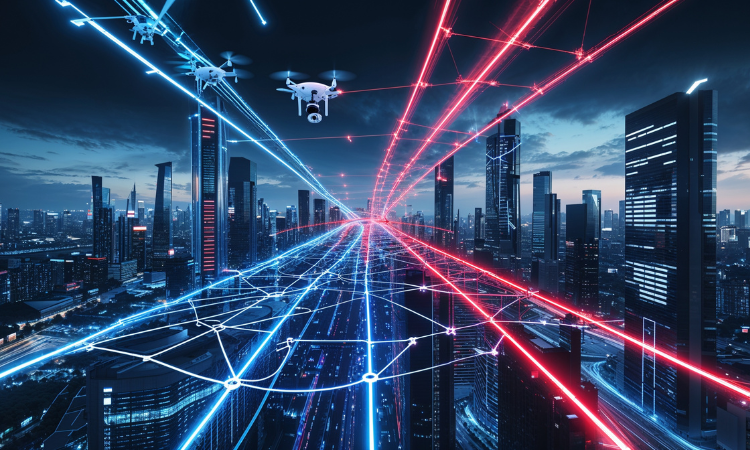
The economic model behind DeAI tokens is unlike anything seen in previous crypto cycles. Unlike speculative meme assets or hype-driven projects, tokens inside the DeAI crypto 2026 ecosystem derive value directly from utility. They power computation. Also they reward model contributions. And they secure the training process. And they activate intelligence across decentralized networks.
Every token inside a DeAI system represents work. It reflects compute cycles, data insights, or model improvements contributed by participants. This connection between effort and reward strengthens the economic foundation of these networks. The token is no longer just a tradable symbol. It becomes the fuel of intelligence.
On top of that, DeAI networks include token sinks. These sinks reduce circulating supply by requiring tokens for model execution, inference tasks, or training access. As more developers and companies use decentralized AI, demand rises naturally. This demand ties token value to real-world activity inside DeAI crypto 2026 ecosystems.
Another layer comes from governance. Many DeAI tokens grant voting power. This structure lets contributors shape how the network evolves. Decisions about model updates, training incentives, or infrastructure changes come from the community. This governance makes DeAI networks more democratic and transparent than traditional AI structures.
The final economic pillar is scalability. DeAI does not rely on one company or one server. It grows as contributors join. As more nodes appear, the network becomes cheaper, faster, smarter, and more valuable. Tokens reflect that growth. Their value becomes tied directly to global collaboration and community intelligence.
This type of economic model sets DeAI crypto 2026 apart as a new category of blockchain asset. It blends computation, intelligence, and tokenomics into a single engine of digital value.
9. Risks, Limitations, and Challenges
Despite its promise, DeAI faces important challenges. Understanding these limitations is essential for anyone exploring DeAI crypto 2026 as an investor or developer.
One challenge is hardware. Running AI models on decentralized networks requires GPUs or specialized hardware. Not everyone has access to these resources. This creates entry barriers and slows initial adoption. Networks must develop ways to incentivize smaller contributors or allow lighter participation to reduce inequality.
Another challenge is model consistency. Decentralized systems require coordination across multiple nodes. Models trained in fragments must still behave reliably. If nodes fail or produce inconsistent outputs, the entire network suffers. DeAI frameworks must continue improving verification, redundancy, and performance guarantees.
Regulation adds another layer of uncertainty. Governments are still learning how to regulate AI, let alone decentralized AI. Questions about model accountability, training rights, and privacy laws remain unresolved. This uncertainty impacts how quickly DeAI can integrate into mainstream industries.
Token volatility is also a risk. Even if tokens represent real utility, market emotions still influence crypto pricing. Strong fundamentals do not always protect token value from speculation. Anyone participating in DeAI crypto 2026 must understand the balance between utility growth and market cycles.
Security remains a concern as well. Decentralized systems reduce single points of failure, but they increase attack surfaces. Networks must protect themselves from manipulated data, poisoned models, or malicious node behaviors. Without strong defense mechanisms, DeAI can become vulnerable.
The last challenge is adoption. Many companies hesitate to adopt decentralized systems because of perceived complexity. For DeAI to reach full potential, its tools must become easier, more intuitive, and more accessible.
While these challenges are real, they are not insurmountable. They are simply part of the natural evolution of a transformative technology.
10. The Road Ahead: How DeAI Will Transform Web3 by 2030
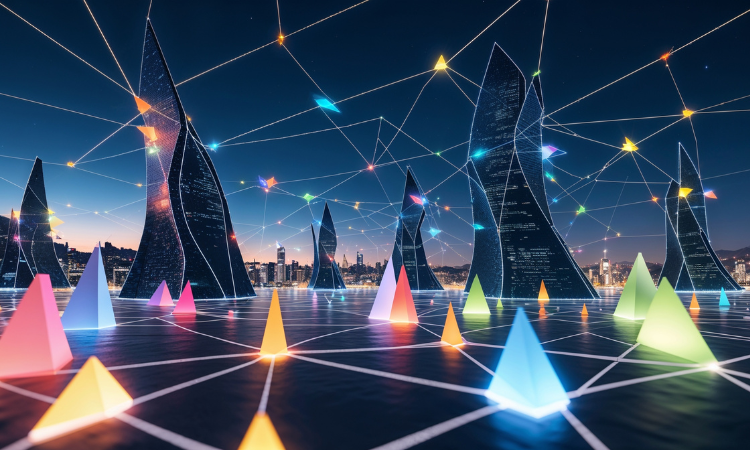
The future of Web3 is not just decentralized. It is intelligent. And that intelligence will not live in private servers. It will operate inside global, community-owned ecosystems powered by DeAI crypto 2026.
By 2030, decentralized AI will influence nearly every digital and physical system. Smart contracts will evolve into smart agents. These agents will negotiate, trade, and adapt on behalf of users. They will analyze data in real time and execute decisions using decentralized compute networks.
DeAI will merge with DePIN to run real-world infrastructure. Cities will use decentralized AI for energy optimization, traffic control, and security systems. This collaboration between data, sensors, and AI will make physical infrastructure more efficient and more transparent.
Web3 platforms will also rely on DeAI to deliver personalized experiences. Instead of centralized feeds or recommendation algorithms, decentralized models will generate custom interactions without invading privacy.
AI governance will also transform. Communities will decide how models evolve. They will vote on training methods, data sources, and ethical guidelines. This creates a new relationship between humanity and intelligence — one built on shared control rather than corporate dominance.
Ultimately, DeAI crypto 2026 will redefine the internet’s foundation. It will shift power from companies to communities. It will democratize intelligence. And it will create a digital world where everyone has a stake in the evolution of AI.

Frequently Asked Questions (DeAI Crypto 2026)
1. What makes DeAI different from traditional AI tokens?
Traditional AI tokens often represent speculation. DeAI tokens represent real compute, real data, and real intelligence contributions. They connect directly to the economic engine of decentralized AI.
2. How can individuals participate in DeAI networks?
You can run nodes, provide compute, contribute datasets, or publish AI models. You earn rewards through DeAI crypto 2026 token incentives for each contribution.
3. Which DeAI projects have the strongest fundamentals in 2026?
Bittensor, SingularityNET, Fetch.ai, Render Network, Ocean Protocol, and emerging data networks like Grass and Arkham form the core of the DeAI ecosystem.
4. Is decentralized AI safer than centralized AI?
Yes. It protects privacy, reduces bias, improves transparency, and removes single points of failure. Blockchain ensures every contribution is recorded and verifiable.
5. Will DeAI replace traditional cloud AI systems?
Not immediately, but it will complement and eventually surpass many centralized systems due to its resilience, transparency, and global collaboration.

DeAI Crypto 2026 Conclusion
The rise of DeAI marks a turning point for crypto, AI, and the entire digital economy. It introduces a world where intelligence becomes decentralized. It also brings transparency, fairness, and autonomy into a space once controlled by a handful of companies.
With DeAI crypto 2026, individuals own the compute, the models, and the data. They participate directly in the evolution of intelligence. Also they earn tokens tied to real work. While helping to build networks that are open, resilient, and powerful.
This transformation does not happen overnight. But the momentum is clear. DeAI is not a trend. It is the logical next step for blockchain and artificial intelligence. It is the architecture of a future where intelligence is open, shared, and unstoppable.
The revolution has already begun. And for the first time in history, the world can build AI together.