


Crypto Regulation 2026
Bitcoin recently pushed above the $72,000 level, reinforcing a bullish tone across the broader crypto market. Analysts see the possibility of further upside if ETF inflows remain strong and risk sentiment stays supportive. Yet beneath the optimism lies a more complex structural environment. Weekend trading has already revealed thin liquidity conditions, where relatively small flows can amplify price swings across Bitcoin, Ethereum, and high-beta altcoins.
At the same time, regulatory pressure continues to reshape the industry. The United States has struggled to finalize a comprehensive crypto bill after negotiations stalled between policymakers and large financial institutions. Meanwhile, Europe is moving forward with MiCA implementation, and new global tax-reporting frameworks from the OECD are forcing exchanges and issuers to adapt to stricter transparency standards.
Together, these developments illustrate how crypto regulation 2026 is becoming one of the most important structural forces shaping market behavior. Rather than focusing only on price levels, serious participants are increasingly watching policy developments, liquidity dynamics, and infrastructure risks to understand where the market may be heading next.

Section 1 — Why Liquidity Still Drives Market Stability
Crypto markets often appear deep during strong rallies. However, true liquidity is not measured by headline prices but by the market’s ability to absorb large transactions without significant volatility. Recent weekend trading conditions illustrate how fragile that depth can be when trading volumes fall and leverage resets.
Thin liquidity environments amplify price swings. As explored in our analysis of crypto market liquidity, market depth only becomes visible when volatility exposes structural weaknesses. When fewer buyers and sellers are active, even moderate orders can push markets sharply higher or lower. This phenomenon explains why weekend trading frequently produces exaggerated moves relative to weekday sessions.
Liquidity sensitivity becomes even more visible during macro uncertainty. As traders wait for economic data or regulatory announcements, they reduce exposure and leverage. This contraction in risk appetite reduces available market depth.
In this environment, crypto regulation 2026 plays an indirect role in shaping liquidity conditions. When regulatory uncertainty rises, institutional participation slows, which can further reduce market depth during key periods.
Section 2 — ETF Flows and Institutional Influence
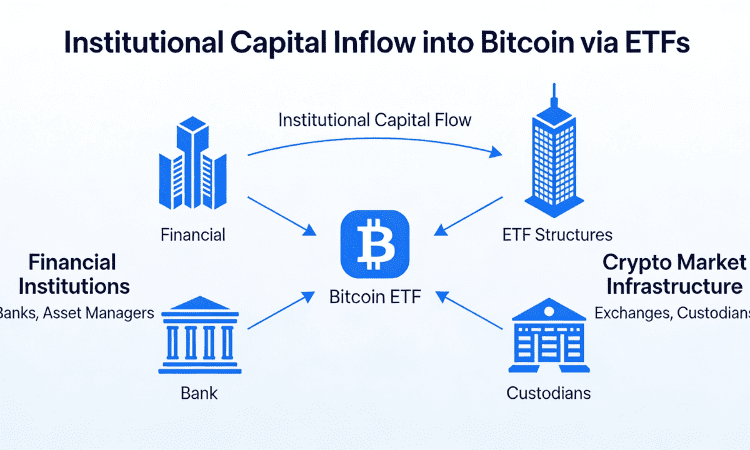
Spot Bitcoin and Ethereum ETFs have introduced a new channel for institutional capital. These investment vehicles allow traditional investors to gain exposure to digital assets without directly holding cryptocurrencies.
ETF inflows can provide powerful support for market trends. When large funds allocate capital through these products, they create steady buying pressure that strengthens market sentiment. This dynamic partly explains the resilience seen after Bitcoin’s recent breakout above $72,000.
However, ETF-driven liquidity differs from organic market participation. Institutional flows often respond to macroeconomic signals, risk appetite, and portfolio allocation strategies rather than crypto-native fundamentals.
Because of this, crypto regulation 2026 is increasingly tied to institutional confidence. Clear rules regarding custody, taxation, and exchange licensing influence how comfortably large financial entities participate in the market.

Section 3 — Regulatory Gridlock in the United States
While the market continues to grow, regulatory clarity in the United States remains uncertain. A widely discussed crypto bill recently reached a political impasse after large banks declined to support a compromise negotiated with the White House.
This stalemate highlights the tension between financial institutions and crypto innovators. Banks often advocate stricter oversight and compliance structures, while industry participants push for flexible frameworks that allow innovation to continue.
The outcome of these negotiations will play a major role in determining how crypto regulation 2026 evolves within the world’s largest capital market. Without clear legislation, enforcement actions and agency interpretations may continue to shape policy in unpredictable ways.
Such uncertainty can discourage long-term infrastructure investment and slow the pace of institutional adoption. These challenges also highlight the broader issue of centralized infrastructure risks in crypto markets, where trading activity depends heavily on a small number of exchanges.

Section 4 — Europe’s MiCA Framework Changes the Landscape
While the United States debates legislation, Europe is already implementing comprehensive rules through the Markets in Crypto-Assets (MiCA) framework. These regulations introduce licensing requirements, capital reserves, and transparency obligations for exchanges and token issuers.
MiCA represents one of the most advanced regulatory frameworks for digital assets globally. By providing a consistent legal structure across the European Union, the policy aims to create predictable conditions for businesses operating within the region.
Under crypto regulation 2026, exchanges and stablecoin issuers operating in Europe must meet stricter compliance standards. Although these requirements increase operational costs, they also provide regulatory clarity that many institutions consider essential before allocating large amounts of capital.

Section 5 — Stablecoins and the GENIUS Act
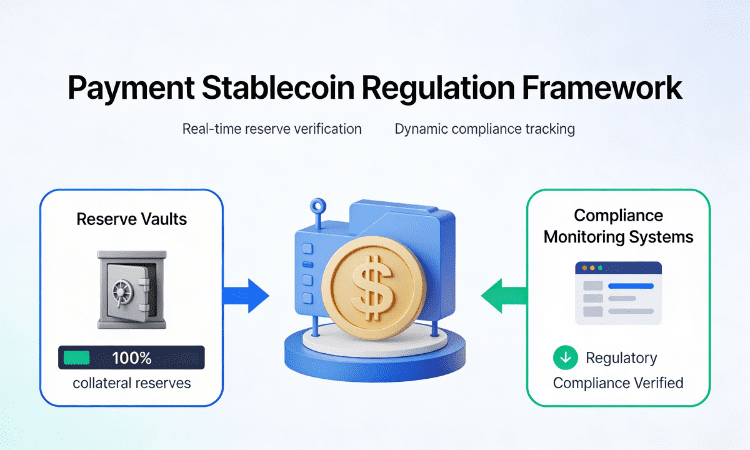
Stablecoins have become a critical component of the crypto ecosystem, facilitating trading, payments, and decentralized finance applications. Recognizing their systemic importance, U.S. regulators are advancing detailed rules under the GENIUS Act.
These proposed regulations focus on reserve transparency, redemption guarantees, and disclosure obligations for payment stablecoin issuers. The objective is to ensure that digital dollars circulating in the crypto economy remain fully backed and redeemable.
If implemented, the rules will significantly influence which issuers dominate the market. Stronger compliance standards could consolidate stablecoin activity around entities capable of meeting strict reserve and reporting requirements.
Consequently, crypto regulation 2026 may reshape the competitive landscape of stablecoin providers and alter liquidity flows across trading venues.

Section 6 — DeFi Security and the Bridge Problem
Decentralized finance continues to expand, but security vulnerabilities remain a persistent challenge. Cross-chain bridges and complex smart contracts are particularly exposed to exploits, often resulting in substantial losses.
Each major security breach tends to trigger short-term risk aversion across the crypto market. For long-term participants, understanding crypto ownership responsibilities for long-term holders becomes essential when navigating these security risks. Investors frequently move capital toward assets perceived as safer, including Bitcoin, Ethereum, and large stablecoins.
This behavior reinforces the role of crypto regulation 2026 in shaping risk perception. As policymakers introduce stricter oversight for digital asset infrastructure, developers may face new expectations around auditing, disclosure, and security standards.
While regulation alone cannot eliminate vulnerabilities, it may push projects toward stronger operational safeguards.

Section 7 — What Traders Are Watching Now
Market participants are closely monitoring several signals that could influence near-term conditions.
ETF flow data remains a key indicator of institutional demand. Sustained inflows typically support bullish momentum, while outflows can quickly shift sentiment.
Regulatory headlines from Washington and Brussels also command attention. Developments related to the stalled U.S. legislation and the ongoing rollout of MiCA may alter the competitive environment for exchanges and stablecoin issuers.
Finally, traders remain alert to security risks within DeFi protocols. Any new exploit involving bridges or smart contracts can rapidly change market dynamics, particularly in a liquidity-sensitive environment.
Together, these factors illustrate how crypto regulation 2026 intersects with liquidity, institutional flows, and technological risk.
Conclusion Crypto Regulation 2026
Crypto markets often focus on price milestones and short-term volatility. However, structural forces increasingly determine the direction and resilience of the ecosystem. Liquidity conditions, institutional participation, regulatory clarity, and infrastructure security now shape market behavior as much as speculative demand.
As Bitcoin trades above key levels and institutional flows continue to influence sentiment, the regulatory landscape will remain one of the most important drivers of long-term development.
Understanding how crypto regulation 2026 interacts with liquidity, stablecoins, and DeFi security provides deeper insight into the evolving structure of digital asset markets. For investors and analysts alike, watching these underlying forces may prove far more valuable than predicting the next price move.
FAQ
What is crypto regulation 2026?
It refers to the evolving global regulatory framework shaping digital asset markets through legislation, enforcement actions, and compliance requirements.
Why does regulation affect crypto liquidity?
Institutional investors often require regulatory clarity before committing large capital allocations, which influences overall market depth.
What is the GENIUS Act for stablecoins?
The GENIUS Act proposes rules governing reserves, redemption, and disclosures for payment stablecoins in the United States.
How does MiCA affect crypto exchanges?
MiCA requires exchanges operating in the European Union to obtain licenses, meet capital requirements, and follow strict transparency standards.
Why do DeFi exploits affect market sentiment?
Security breaches increase perceived risk, often pushing investors toward larger and more established crypto assets.