
Crypto AI Agents
Blockchain began as a system that removed trust from transactions. Smart contracts took that idea further by automating execution. Now a new layer is emerging, and it changes everything again. That layer is crypto AI agents.
For years, humans controlled wallets, strategies, and decisions. Bots followed rules, but they never truly adapted. Today, artificial intelligence changes that balance. AI systems can analyze data, learn patterns, and act without constant supervision. When these abilities merge with blockchain, something powerful appears.
Crypto AI agents operate continuously. They monitor markets. Also they execute transactions. They coordinate with other agents. And they do all of this on-chain, with transparency and verification. This shift marks a turning point where blockchain stops being reactive and becomes proactive.
This article explores how crypto AI agents work, why they matter, and why they represent the next stage of blockchain evolution.
1. What Are Crypto AI Agents? A Simple Explanation
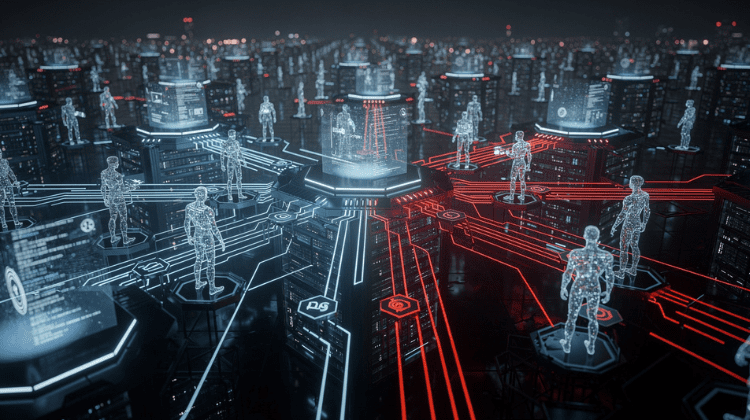
Crypto AI agents are autonomous software entities that use artificial intelligence to make decisions and blockchain to execute them. Unlike traditional bots, they do not rely on fixed scripts alone. They learn, adapt, and improve over time.
An AI agent observes data first. That data can come from markets, blockchains, APIs, or sensors. Next, it evaluates options using machine-learning models. Finally, it takes action by interacting with smart contracts, wallets, or decentralized applications.
This process happens continuously. No human needs to approve every step. That autonomy is what separates AI agents from standard automation tools.
Another key difference lies in accountability. Actions occur on-chain. Transactions are recorded. Outcomes are verifiable. Blockchain ensures that autonomous behavior remains transparent and auditable.
They also operate with incentives. Tokens reward successful actions. Poor decisions reduce influence or earnings. This economic feedback loop aligns intelligence with performance.
In simple terms, AI agents are digital workers. They think, decide, and act inside blockchain systems. And they do it faster and more consistently than humans ever could.
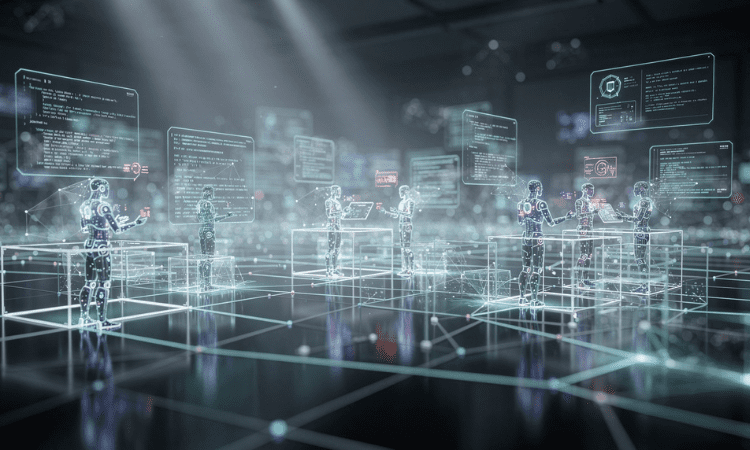
2. Why Smart Contracts Were Only the Beginning
Smart contracts changed blockchain by removing intermediaries. They enforced rules automatically. However, they remain static. Once deployed, they do not learn. They do not adapt. And they do not respond to changing conditions.
This limitation created a ceiling. Smart contracts execute logic, but they cannot evaluate context. They cannot optimize strategy. They cannot improve outcomes over time. That gap opens the door for AI agents.
AI agents sit above smart contracts. They decide when and how contracts should execute. And Then analyze multiple variables before triggering actions. While also adjusting strategies as conditions change.
For example, a smart contract might execute a trade at a fixed price. A crypto AI agent evaluates volatility, liquidity, timing, and risk before deciding whether that trade should happen at all.
This relationship turns smart contracts into tools rather than decision-makers. AI agents become the intelligence layer that directs those tools effectively.
As blockchain systems grow more complex, static automation falls short. The agents solve this problem by introducing adaptive logic. They upgrade blockchain from rule-based execution to intelligent coordination.

3. How These AI Agents Actually Work
Understanding how AI agents function helps explain why they scale so well. Each agent follows a layered structure that balances intelligence and execution.
First comes data ingestion. The agent collects information from multiple sources. Market feeds, on-chain metrics, historical records, and external signals all feed into its decision process.
Next comes the intelligence layer. Machine-learning models analyze the incoming data. These models predict outcomes, assess probabilities, and rank potential actions. Over time, feedback improves accuracy.
Then comes execution. Once a decision is made, the agent interacts with blockchain infrastructure. It signs transactions, calls smart contracts, or coordinates with other agents. Blockchain ensures finality and security.
Verification plays a critical role. Many systems include performance scoring or staking mechanisms. Agents that perform well earn more trust and resources. Agents that fail lose influence.
This structure allows crypto AI agents to operate independently while remaining accountable. It also enables coordination. Multiple agents can specialize, communicate, and cooperate across networks.
Because of this design, AI agents scale naturally. They do not require constant oversight. They simply follow incentives, learn from outcomes, and execute efficiently.
4. The Infrastructure Powering Crypto AI Agents
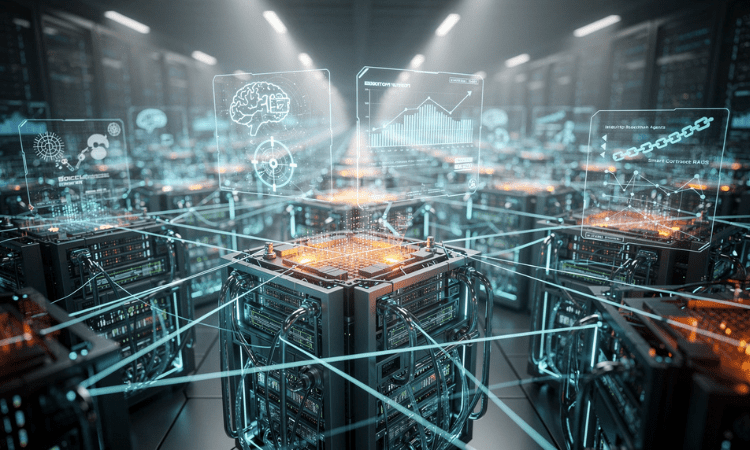
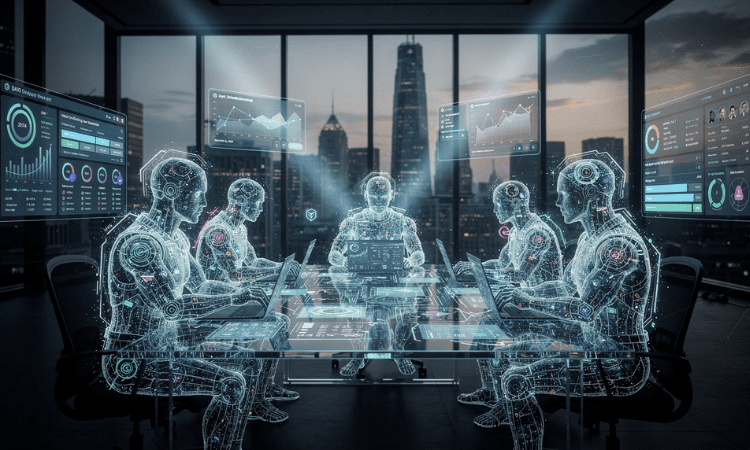
They do not operate in isolation. They depend on a growing stack of decentralized infrastructure that allows intelligence to run continuously, securely, and at scale. Without this foundation, autonomous systems could not exist.
Compute networks sit at the core. AI models require processing power for training and inference. Decentralized compute platforms distribute this workload across global nodes. This removes reliance on centralized cloud providers and keeps AI agents always available.
Next comes blockchain execution. Smart contracts, wallets, and on-chain messaging systems allow agents to act. Every decision leads to a verifiable transaction. This guarantees transparency and trust, even when humans are no longer directly involved.
DePIN networks add a physical layer. Sensors, devices, and infrastructure provide real-world data. The agents use this input to respond to physical conditions, not just digital signals. This connection allows agents to manage energy systems, logistics, and decentralized networks.
Storage networks complete the picture. AI agents need access to historical data, models, and states. Decentralized storage ensures persistence without centralized risk. Together, these layers form the operating environment where these AI agents thrive.
This infrastructure stack explains why autonomous intelligence becomes practical now. Compute, execution, data, and incentives finally align.
5. Real Use Cases Already Live Today
Crypto AI agents are not theoretical. They already operate across multiple blockchain sectors. These use cases reveal how fast this transformation is happening.
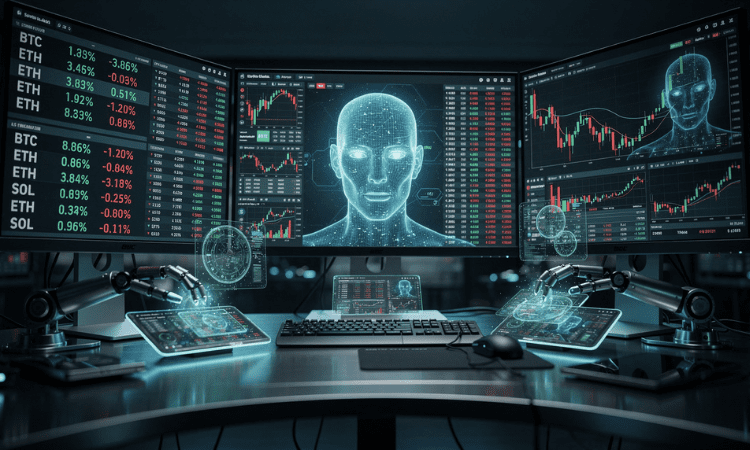
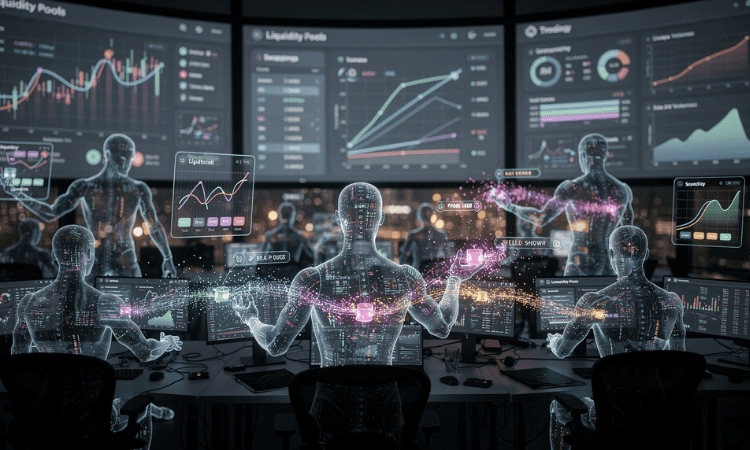
In trading, agents analyze markets continuously. They rebalance portfolios. They manage risk dynamically. Unlike bots, they adapt strategies as conditions evolve. This autonomy reduces emotional decision-making and increases consistency.
In DeFi, these agents optimize liquidity. They move capital across protocols to maximize yield. Also they respond instantly to rate changes. They also manage collateral to prevent liquidations before they occur.
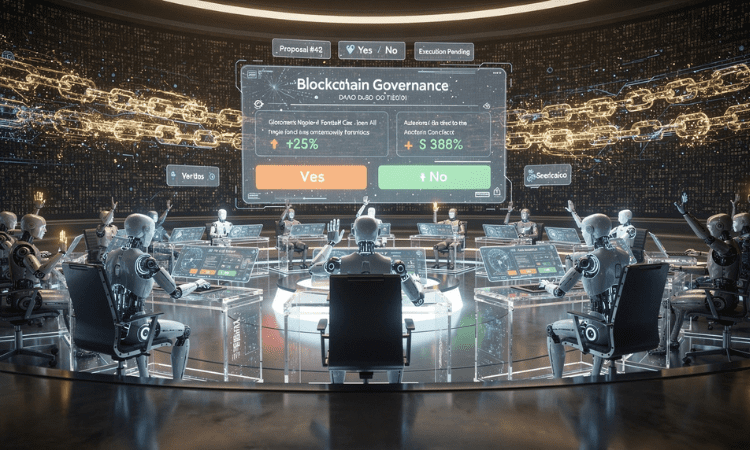
DAO governance offers another example. Agents analyze proposals, simulate outcomes, and vote based on defined objectives. Some even execute approved actions automatically. This reduces coordination friction and improves operational efficiency.
Mining and infrastructure management also benefit. Agents monitor energy prices, hardware performance, and network demand. They adjust workloads in real time. This automation improves profitability while reducing waste.
Across all these areas, the agents act as tireless operators. They do not sleep. They do not hesitate. And they continuously improve through feedback.

6. Leading Crypto AI Agent Projects to Watch
Several projects already demonstrate the power of AI agents. Each focuses on a different aspect of autonomy and intelligence.
Fetch.ai pioneered autonomous economic agents. These agents negotiate services, manage resources, and coordinate actions without human oversight. Their design fits naturally into decentralized economies.
Bittensor builds a market for intelligence itself. Agents contribute models and predictions. The network evaluates performance. High-quality intelligence earns greater rewards. This structure turns learning into an economic activity.
Autonolas (OLAS) focuses on agent orchestration. It allows developers to deploy, manage, and coordinate multiple agents across blockchains. This layer simplifies building complex autonomous systems.
SingularityNET integrates AI services and agents into an open marketplace. Developers deploy intelligent services that interact autonomously. This openness accelerates experimentation and collaboration.
Together, these projects reveal a pattern. The agents are not replacing humans. They augment systems, automate coordination, and unlock new efficiencies across blockchain ecosystems.

7. How Crypto AI Agents Change Blockchain Economics
Blockchain economics shift dramatically once autonomy enters the system. With them, markets no longer wait for human reaction time. Decisions happen continuously, driven by data and incentives rather than emotion.
One major change is machine-to-machine commerce. Agents negotiate prices, allocate capital, and execute contracts without intermediaries. Fees drop. Latency shrinks. Markets become more efficient.
Another shift appears in labor dynamics. Tasks once handled by teams now run through agents. Portfolio management, liquidity routing, governance execution, and infrastructure optimization become automated services. This automation reduces overhead and unlocks new productivity.
Token flows also evolve. Instead of users manually transacting, agents move value on their behalf. That constant activity increases on-chain usage and strengthens network effects. In this environment, these agents become economic actors, not tools.
The result is an always-on economy where intelligence drives value creation at scale.
8. Risks, Ethics, and Control Challenges
Autonomy brings power, but it also introduces risk. The AI agents must operate within clearly defined boundaries to prevent unintended outcomes.
Security remains the top concern. Bugs, flawed models, or malicious prompts can cause agents to act incorrectly. Strong permissioning, sandboxing, and auditability are essential safeguards.
Ethics also matter. Agents make decisions that affect capital, governance, and infrastructure. Clear objectives and constraints reduce harmful behavior. Kill-switches and human override mechanisms remain necessary.
Regulatory uncertainty adds complexity. Autonomous systems challenge existing legal frameworks. Accountability, liability, and compliance continue to evolve as adoption grows.
Finally, over-automation can introduce fragility. Blind reliance on agents without monitoring can amplify errors. Successful adoption balances autonomy with oversight.
Understanding these challenges ensures crypto AI agents deliver benefits without undermining trust.
9. The Future: Autonomous Economies by 2030
Looking ahead, the trajectory is clear. Crypto AI agents will coordinate entire ecosystems.
DAOs will rely on agents to manage operations. Supply chains will optimize themselves. Energy grids will rebalance dynamically. Markets will adjust in real time to global conditions.
As compute becomes cheaper and models improve, agents grow more capable. They collaborate. And specialize. Also they negotiate. Over time, these networks resemble autonomous economies where humans set goals and agents execute relentlessly.
By 2030, blockchain may no longer feel manual at all. It will feel intelligent. And these AI agents will be the force making that possible.
Conclusion
Crypto AI agents represent a fundamental upgrade to blockchain. They introduce intelligence, adaptability, and autonomy where static rules once dominated.
By combining AI with decentralized execution, these agents remove friction, increase efficiency, and unlock new economic models. They transform blockchain from a reactive ledger into a proactive system.
This shift is not speculative. It is already happening. And those who understand crypto AI agents early will shape how decentralized systems operate for the next decade.
Autonomy is no longer optional. It is the next layer of blockchain evolution.

Frequently Asked Questions (Q&A)
1. What are crypto AI agents in simple terms?
They are autonomous AI systems that make decisions and execute actions on blockchain networks.
2. Are AI agents the same as trading bots?
No. Bots follow fixed rules. These AI agents learn, adapt, and operate across multiple tasks.
3. Can individuals use AI agents today?
Yes. Several platforms allow users to deploy or interact with agents already.
4. Are these agents dangerous?
They carry risk if poorly designed, but proper controls and oversight reduce those risks significantly.
5. Will AI agents replace human decision-makers?
They augment human intent rather than replace it, handling execution and optimization at scale.