


Crypto Self-Custody: Why Owning Crypto Means More Than Buying It
For many people, buying cryptocurrency is the easiest part of the journey. Opening an exchange account, purchasing Bitcoin or Ethereum, and watching the market move can all be done within minutes.
But owning cryptocurrency is fundamentally different from owning stocks or keeping money in a traditional bank account.
With digital assets, true ownership depends on who controls the private keys. If someone else holds those keys, they ultimately control access to your funds—even if your account balance appears under your name.
This simple idea sits at the heart of crypto self-custody.
As the cryptocurrency ecosystem continues to mature, more investors are recognizing that protecting digital assets involves more than choosing the right coins. It also means understanding where those assets are stored, who controls them, and how they can be recovered if something goes wrong.
The phrase “Not your keys, not your coins” has become one of the industry’s most enduring principles because it captures this reality in just a few words.
This guide explains what self-custody is, why it matters, how it differs from exchange custody, and what every beginner should know before taking control of their digital assets.

Section 1 — What Is Crypto Self-Custody?
At its core, crypto self-custody means maintaining direct control over the private keys that grant access to your cryptocurrency.
Unlike a bank account, cryptocurrency does not exist inside a wallet. Every coin or token remains recorded on its respective blockchain. What determines ownership is the ability to authorize transactions using private keys.
When those private keys are controlled by an exchange, the exchange effectively acts as the custodian of your assets. You retain account access, but the underlying control remains with a third party.
Self-custody reverses that relationship.
Instead of relying on an institution, you become responsible for storing and protecting your own private keys. Whether through a software wallet or a hardware wallet, the authority to move assets remains entirely in your hands.
This shift is one of cryptocurrency’s defining innovations. It removes the need for a traditional intermediary and gives individuals direct ownership over their digital wealth.
That freedom, however, comes with responsibility. There is no customer support capable of restoring access if recovery information is permanently lost.
Understanding this balance between independence and responsibility is the foundation of successful self-custody.

Section 2 — Why Self-Custody Matters
Many new investors assume the greatest risk in cryptocurrency comes from market volatility.
While price fluctuations are unavoidable, history has shown that security failures and counterparty risks can be equally damaging.
Over the years, numerous exchanges have experienced hacks, operational failures, insolvencies, or temporary withdrawal suspensions. Even highly reputable platforms operate within legal, technical, and financial environments that can change unexpectedly.
When assets remain under third-party custody, investors become dependent on systems they do not control. To understand why this concentration of control matters, read our analysis of Crypto Exchange Centralization: The Hidden Structural Risk in Markets.
Self-custody reduces that dependency.
By holding private keys personally, investors eliminate many of the risks associated with centralized custody. Access to digital assets no longer depends on an exchange remaining operational, solvent, or available during periods of market stress.
This does not mean self-custody eliminates all risks. Instead, it changes the nature of those risks.
Responsibility shifts from institutional trust toward personal security practices.
For many long-term investors, that trade-off provides greater confidence and greater control over their financial future.

Section 3 — Self-Custody vs Exchange Custody
Choosing between exchange custody and self-custody is ultimately a question of control.
Both approaches have legitimate use cases, but they serve different purposes.

Exchange custody offers convenience. It simplifies buying, selling, and transferring assets while reducing the technical burden placed on beginners.
Self-custody prioritizes ownership instead.
Rather than trusting a third party to secure digital assets, investors rely on their own security procedures and backup strategies.
As discussed in our article on Crypto Exchange Centralization: The Hidden Structural Risk in Markets, reducing dependence on centralized intermediaries has become an increasingly important consideration for long-term crypto investors.
Neither approach is universally superior.
Many experienced investors actively use exchanges for trading while transferring long-term holdings into self-custody for additional protection.
This hybrid approach combines convenience with stronger ownership principles.

Section 4 — The Different Types of Crypto Wallets
One of the first decisions every cryptocurrency investor faces is choosing where to store digital assets. Not all wallets offer the same level of convenience, security, or ownership, and understanding these differences is essential before moving funds into crypto self-custody.
Each wallet type serves a different purpose. Some prioritize accessibility, while others focus on long-term protection.
Exchange Wallets
Exchange wallets are the most common starting point for beginners. When you purchase cryptocurrency through a centralized exchange, your assets are typically stored within the platform’s custodial wallet.
The greatest advantage is convenience. Buying, selling, and transferring assets can all be managed from a single interface without requiring any technical knowledge.
However, exchange wallets also introduce counterparty risk. Since the exchange controls the private keys, users rely on the platform’s security, operational stability, and financial health.
For active trading, exchange wallets are practical. For long-term storage, many investors eventually seek greater control.
Software Wallets
Software wallets store private keys on internet-connected devices such as computers or smartphones.
These wallets are generally divided into three categories:
Desktop wallets, installed directly on a computer.
Mobile wallets, designed for smartphones and everyday transactions.
Browser extension wallets, commonly used for interacting with decentralized applications (dApps) and Web3 services.
Software wallets give users direct control over their private keys while remaining convenient for frequent use. They are particularly useful for participating in decentralized finance (DeFi), NFTs, staking, and blockchain applications.
The trade-off is that internet-connected devices are naturally exposed to malware, phishing attacks, and other online threats. Maintaining updated software and practicing good cybersecurity habits becomes especially important.
Hardware Wallets
Hardware wallets are dedicated physical devices designed to keep private keys offline.
Rather than exposing sensitive information to an internet-connected computer, the wallet securely signs transactions within the device itself. This significantly reduces the attack surface available to hackers or malicious software.
For investors holding substantial cryptocurrency over long periods, hardware wallets are widely considered one of the strongest security solutions available.
Their primary purpose is not convenience but protection.
As portfolios grow, many investors transition from software wallets to hardware wallets as part of a broader long-term security strategy.
Paper Wallets
Paper wallets were once a popular storage method during the early years of cryptocurrency.
They typically consisted of printed private keys or QR codes stored offline.
While completely disconnected from the internet, paper wallets present practical challenges. Physical damage, loss, fading ink, or accidental exposure can permanently compromise access to funds.
For this reason, paper wallets have become far less common and are generally considered outdated compared with modern hardware wallet solutions.
Which Wallet Is Right for You?
There is no single wallet that suits every investor.
Someone making occasional trades may prioritize convenience and liquidity. A long-term investor focused on wealth preservation may value security above everything else.
Many experienced cryptocurrency holders use more than one wallet simultaneously:
An exchange wallet for buying and selling.
A software wallet for interacting with decentralized applications.
A hardware wallet for protecting long-term investments.
This layered approach balances accessibility with security and reflects how many professionals manage digital assets today.
Ultimately, the best wallet is not simply the most advanced one—it is the one that matches your investment goals, technical confidence, and commitment to protecting your cryptocurrency over the long term.

Section 5 — Common Beginner Mistakes
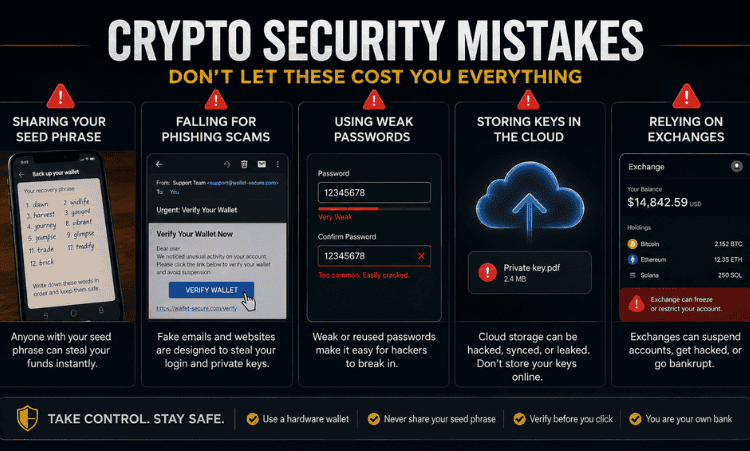
Transitioning to crypto self-custody is an important step toward greater financial independence, but it also introduces new responsibilities. Most security incidents do not occur because blockchain technology fails. Instead, they happen because users make avoidable mistakes.
Understanding these common pitfalls can significantly reduce the likelihood of losing access to your digital assets.
Leaving Large Holdings on an Exchange
One of the most frequent mistakes is treating a cryptocurrency exchange as a long-term storage solution.
Exchanges are designed primarily for buying, selling, and trading digital assets. While many invest heavily in security, they remain centralized businesses that operate under technical, financial, and regulatory risks.
For investors planning to hold cryptocurrency over several years, keeping substantial balances on an exchange may expose assets to unnecessary counterparty risk.
Storing Recovery Phrases Digitally
Your recovery phrase is the master key to your wallet.
Saving it in cloud storage, taking screenshots, emailing it to yourself, or storing it in a notes application may seem convenient, but these methods create unnecessary vulnerabilities.
If a compromised device or online account exposes your recovery phrase, an attacker can potentially gain complete access to your assets.
A recovery phrase should always be stored securely offline and protected from unauthorized access.
Ignoring Wallet Backups
Some beginners assume that simply owning a wallet is enough.
In reality, creating and verifying secure backups is equally important.
Unexpected events such as hardware failure, accidental deletion, theft, or physical damage can occur without warning. Without a properly stored recovery phrase, recovering access may become impossible.
Good backup practices are not optional—they are a fundamental part of responsible self-custody. These habits form part of the broader responsibilities of owning cryptocurrency, especially for long-term investors.

Falling for Phishing Attacks
Phishing remains one of the most effective methods used by cybercriminals.
Fraudulent websites, fake wallet applications, malicious browser extensions, and deceptive emails are designed to trick users into revealing sensitive information.
Before entering recovery phrases or approving transactions, always verify website addresses, download software only from official sources, and remain cautious of unsolicited messages requesting wallet information.
In cryptocurrency, a few seconds of verification can prevent permanent losses.
Using Weak Security Practices
Strong wallet security extends beyond the wallet itself.
Reusing passwords across multiple services, neglecting two-factor authentication, or operating from unsecured computers increases overall exposure.
Basic cybersecurity habits—including password managers, updated operating systems, antivirus protection, and secure internet connections—provide an important first line of defense.
Every layer of security contributes to protecting digital assets.
Rushing Into Self-Custody Without Learning
Many newcomers feel pressured to move all their cryptocurrency into self-custody immediately.
A better approach is gradual learning.
Start with a small amount of cryptocurrency, become familiar with wallet recovery procedures, understand how transactions work, and gain confidence before transferring larger holdings.
Taking time to learn reduces stress and helps build habits that will serve you well as your portfolio grows.
As we discuss in The Hidden Responsibilities of Owning Crypto, successful investing involves more than choosing the right assets—it also requires developing the knowledge and discipline needed to protect them over the long term.
The good news is that nearly all of these mistakes are preventable. By understanding the risks and following established security practices, beginners can build a solid foundation for managing digital assets with confidence.
The goal of self-custody is not perfection. It is developing reliable habits that keep your cryptocurrency secure today and for many years to come.

Section 6 — Is Self-Custody Right for Everyone?
One of the biggest misconceptions in cryptocurrency is that every investor should immediately move all their assets into self-custody.
The reality is more nuanced.
While crypto self-custody offers greater control and independence, it also requires a willingness to accept personal responsibility. For some investors, that responsibility is empowering. For others, it may feel overwhelming, especially during the early stages of their crypto journey.
The right decision depends on your experience, portfolio size, and long-term goals.
Beginners Can Start Small
If you are completely new to cryptocurrency, there is no need to transfer your entire portfolio into a self-custody wallet on day one.
A more practical approach is to begin with a small amount of cryptocurrency.
This allows you to become familiar with wallet creation, receiving and sending transactions, backing up your recovery phrase, and restoring access if necessary—all without placing significant assets at risk.
Confidence develops through experience.
Long-Term Investors Benefit the Most
Self-custody becomes increasingly valuable as your investment grows.
Someone holding cryptocurrency for several years is generally less concerned with frequent trading and more focused on preserving long-term ownership.
In these situations, maintaining direct control over private keys reduces dependence on centralized exchanges and strengthens overall portfolio security.
Many experienced investors eventually adopt a simple principle:
Trade on exchanges, store long-term holdings in self-custody.
This approach combines convenience with stronger ownership.
Active Traders May Prefer a Hybrid Approach
Not everyone needs to keep every asset in self-custody at all times.
Day traders and active market participants often require immediate access to exchanges for buying and selling.
Many therefore choose a hybrid strategy:
A limited balance remains on an exchange for trading activities.
Long-term investments are transferred into secure personal wallets.
Only the amount needed for active trading stays exposed to exchange custody.
This approach reduces unnecessary risk without sacrificing flexibility.
Self-Custody Is About Responsibility, Not Fear
Some people move to self-custody because they fear exchange failures or cyberattacks.
While those concerns are understandable, the strongest reason for adopting self-custody is ownership.
True ownership means controlling access to your assets rather than relying entirely on another organization.
It is similar to owning physical property. You may choose to store valuables in your own safe rather than leaving them permanently with someone else—not because you expect disaster, but because ownership naturally includes responsibility.
When Should You Consider a Hardware Wallet?
As cryptocurrency holdings become more valuable, many investors begin looking for stronger protection.
This is often the point where hardware wallets become an attractive option.
Unlike software wallets that operate on internet-connected devices, hardware wallets keep private keys isolated during transaction approval, significantly reducing exposure to many common online threats.
For readers considering this next step, our guide to the Best Trezor Wallet compares the available models and explains which device is most suitable for different types of investors.
Choosing the right security solution is not about buying the most expensive device—it is about selecting the level of protection that matches your portfolio and investment strategy.
The Bottom Line
Self-custody is not a requirement for every cryptocurrency user.
However, anyone planning to build long-term wealth through digital assets should understand how it works and when it becomes appropriate.
The goal is not to become a security expert overnight.
The goal is to gradually develop the knowledge, habits, and confidence needed to take ownership of your financial future.
For many investors, self-custody is not the end of the journey—it is the beginning of becoming a truly independent participant in the digital asset economy.
💰 Ready to Take the Next Step?
Understanding crypto self-custody is only the beginning. If you’re ready to secure your digital assets with a hardware wallet, explore our comprehensive Best Trezor Wallet: Complete Security Guide for 2026, where we compare the latest Trezor models and help you choose the right solution for your portfolio.
Frequently Asked Questions
##What is crypto self-custody?
Crypto self-custody is the practice of personally controlling the private keys that provide access to your cryptocurrency. Instead of relying on an exchange or third-party service, you are fully responsible for securing and managing your digital assets.
## Is crypto self-custody safe for beginners?
Yes, provided beginners take time to understand the basics. Starting with a small amount of cryptocurrency, learning how recovery phrases work, and following good security practices can make self-custody both safe and manageable.
## What is the difference between self-custody and exchange custody?
With exchange custody, the exchange controls your private keys and stores your cryptocurrency on your behalf. With self-custody, you control the private keys yourself, giving you complete ownership but also full responsibility for protecting your assets.
## Do I need a hardware wallet for crypto self-custody?
Not necessarily. Software wallets are suitable for many users, especially those with smaller portfolios or frequent transactions. However, investors holding larger amounts of cryptocurrency often choose hardware wallets because they provide an additional layer of protection by keeping private keys offline.
## What happens if I lose my hardware wallet?
Losing the physical device does not mean losing your cryptocurrency, provided you have securely stored your recovery phrase. You can restore access to your assets on another compatible wallet using that recovery phrase.
## Can I keep some crypto on an exchange and some in self-custody?
Yes. Many experienced investors use a hybrid approach. They keep a smaller balance on an exchange for active trading while storing long-term holdings in self-custody to reduce counterparty risk.
## Is self-custody better than leaving crypto on an exchange?
Neither approach is universally better. Exchange custody offers convenience for trading, while self-custody provides greater control and ownership. The best choice depends on your investment goals, technical confidence, and how you plan to use your cryptocurrency.


